Did you know that an improperly measured cup of flour can significantly alter your baked goods? According to King Arthur Baking Company, an over-measured cup of flour can lead to results that are 20% denser than intended, potentially turning a fluffy cake into a brick. Fortunately, you don’t always need a measuring cup to achieve accuracy. With a little know-how, you can precisely measure 1/2 cup of flour using only standard measuring spoons.
The Spoonful Solution for 1/2 Cup Flour
The key to this method lies in understanding the relationship between tablespoons and cups. A standard US measuring cup holds 16 tablespoons. Therefore, to measure 1/2 cup, you need to count out 8 tablespoons of flour.
Here’s how to do it:
- Gather your spoons: You will need a set of measuring spoons, specifically the tablespoon measure.
- The “Spoon and Level” Technique: This is crucial for accuracy.
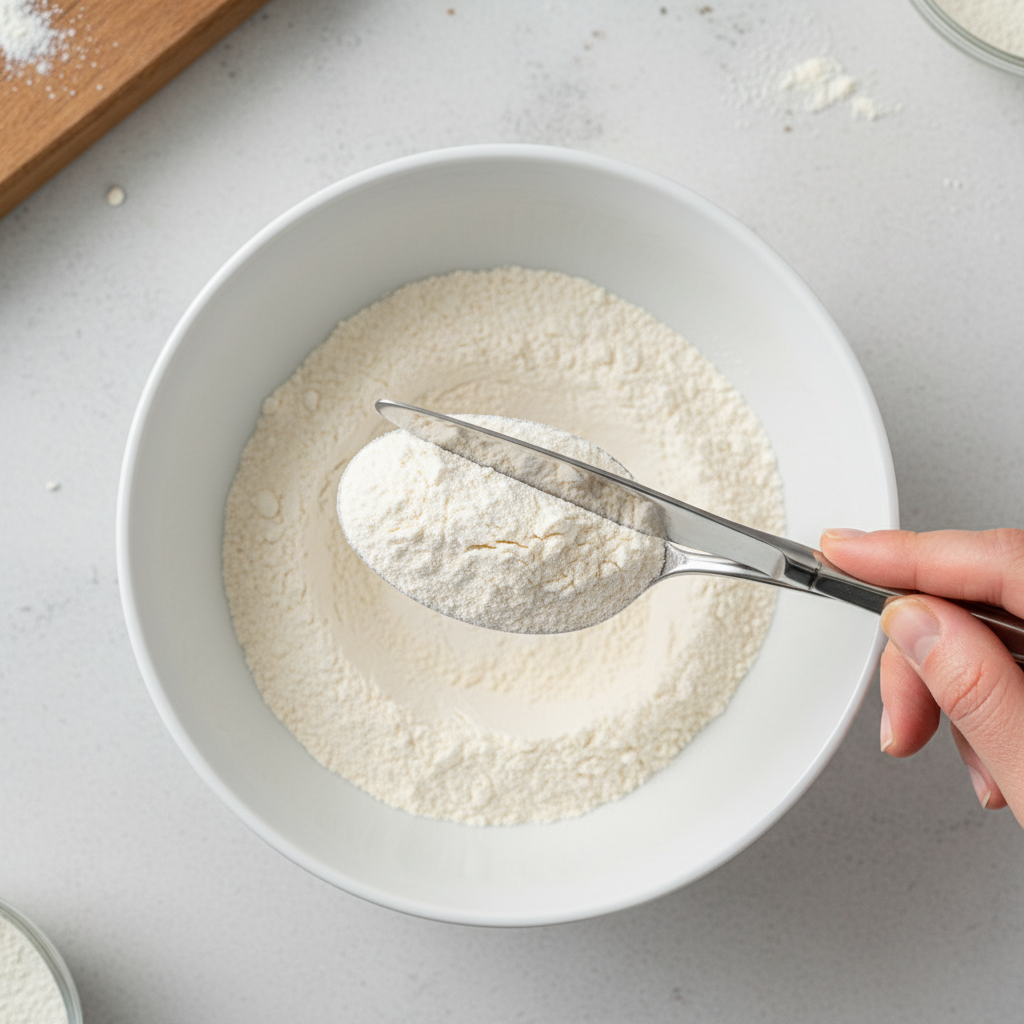
- Spoon the flour: Gently spoon the flour into the tablespoon until it is mounded over the top. Do not scoop directly from the flour bag with the spoon, as this compacts the flour.
- Level it off: Using the straight edge of a knife or another straight utensil, sweep across the top of the spoon to remove the excess flour, creating a flat, even surface. This ensures you have the correct amount.
- Repeat: Repeat this process eight times. Eight level tablespoons of flour equal 1/2 cup.
Remember, this method works best for all-purpose flour. For other types of flour or ingredients, the density can vary, and direct cup measurement or weighing might be more accurate. For those curious about other conversions, you might find this information on how many tablespoons are in 3/4 cup interesting.
Why Accurate Measurement Matters in Baking
Baking is often described as a science, and for good reason. The precise ratio of ingredients dictates the texture, flavor, and structure of your final product.
- Flour: As mentioned, too much flour leads to dense, dry baked goods. Too little can result in a crumbly or flat outcome.
- Sugar: Sugar not only sweetens but also contributes to tenderness, browning, and moisture.
- Leavening Agents: Baking soda and baking powder are critical for rise. Incorrect amounts can lead to a collapsed cake or an unpleasantly metallic taste.
Frequently Asked Questions
Q1: Can I use any tablespoon to measure 1/2 cup of flour?
While you can, it’s highly recommended to use standard measuring spoons. Regular eating tablespoons vary in size and won’t provide consistent results.
Q2: What if I don’t have a leveler, can I still measure accurately?
Yes. After spooning the flour, gently tap the side of the spoon with your finger to settle the flour, then carefully use the back of a butter knife or a similar flat edge to level it off.
Q3: Does this spoon method work for other dry ingredients like sugar or salt?
It works best for flour. For granulated sugar, it’s generally acceptable. However, for ingredients like brown sugar (which needs to be packed) or finer ingredients like salt, precise measuring cups or scales are usually preferred for optimal accuracy. You can find more details on ingredient density and measurement on Wikipedia’s page on measuring cups.
Q4: Why is spooning and leveling better than scooping flour directly?
Scooping directly from a flour container with your measuring spoon compacts the flour, meaning you’ll end up with more flour than the intended measurement, leading to denser baked goods.
Conclusion
Mastering the art of measuring 1/2 cup of flour with spoons is a valuable skill for any home baker. By employing the “spoon and level” technique and understanding the importance of accurate measurements, you can confidently tackle recipes and achieve delicious, consistent results every time. Happy baking!